





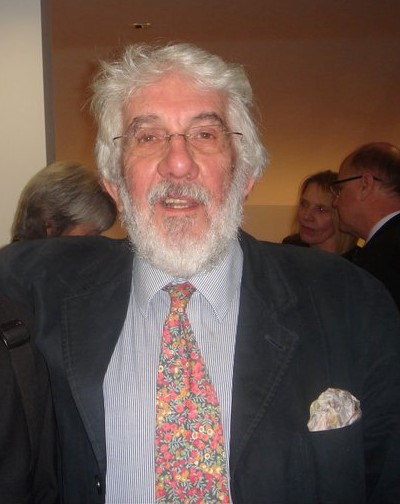
All at the Halsall Lloyd Partnership were saddened to hear of the sudden death of David Wilkinson, a founding partner of the original practice, whose ideas and ethos of designing better homes cheek by jowl with local shops and backyard industry to cement a community together greatly contributed to its direction to this day.
Indeed, his final year thesis at Nottingham University in the late sixties, examined the poor housing stock of the 10,000 homes in St Anne’s, close to the city centre in which half had no hot water system and some only shared toilets. David believed the way forward to retain the existing sense of community was not wholesale demolition, which was the policy at the time. So he asked residents via leaflets, meetings and conversations what they thought should go or be kept - a pioneering concept at the time and the precursor of what we know today as “resident consultation”.
After university, jobs with Liverpool City Council, and Shelter Neighbourhood Action Project (SNAP) a partnership with Ted Clement Evans followed. Then in 1975 he set up Building Design Group with David Goodwin where projects were mainly Victorian refurbishments and new build sheltered housing. Later schemes involved small scale refurbishment cooperatives and the Weller Street Housing Cooperative, Liverpool’s first new-build housing co-op.
A change of name to the Wilkinson Hindle Partnership followed when Derek Hindle replaced the departing David Goodwin, and by 1981 the practice had grown and now included two new partners, Bill Halsall and Geoff Lloyd, and again, another name change - the Wilkinson Hindle, Halsall, Lloyd Partnership. During all this time David maintained a particular sensibility towards Liverpool’s older housing stock, and carried out many refurbishment and conversion projects throughout Merseyside.
But perhaps his tour de force during this period was the rebuilding of Southgate, a failed modernist public housing project, unpopular with residents who nicknamed it ‘washing machine city’ because of its round windows, and reviled nationally as ‘Legoland’ by virtue of its vertically striped multi-coloured plastic panels - an example of the ‘streets in the sky’ phase of housing design. David and his team developed a more ‘humane ‘ approach including semi-detached houses, pitched roofs and traditional brick detailing. He worked closely with local residents and his model making skills helped communicate his ideas to them. The highly coveted ‘Community Enterprise Award’ was given this project in recognition of the prominent role played by the residents of the newly renamed Hallwood Park.
In 1989 David was instrumental in expanding the practice by establishing an office in Nottingham, and its very first project was awarded a commendation from The Times/RIBA Community Enterprise Scheme for the Vale Community Centre, Wollaton in recognition of a successful collaboration with local community volunteers. Today, this multi-award winning successful office continues to build on his ideas and direction.
David was a good man; friendly, helpful, an extremely talented architect, and a superb draftsman and model maker. On retirement in 1999 he and his wife Jackie moved to North Wales where he redesigned and rebuilt his substantial 1920s timber ‘summer house’ into an award winning permanent home where a warm and hearty welcome was always guaranteed. In 2006 he got both an RSAW welsh housing design award and a plaque of merit from the National Eisteddfod; his property also earned a mention in the Gwynedd edition of Pevsner.
In 2017 he and Jackie moved to Hexham, to be nearer to their daughter in Newcastle, which is where he died earlier this year.
David leaves behind his wife Jackie, children Simon, Andrew, Becky and Ben, and eight grandchildren.


